

Guide to Theobromas
Understanding the universe of cacao, copoazú, macambo and the rest of the genus.
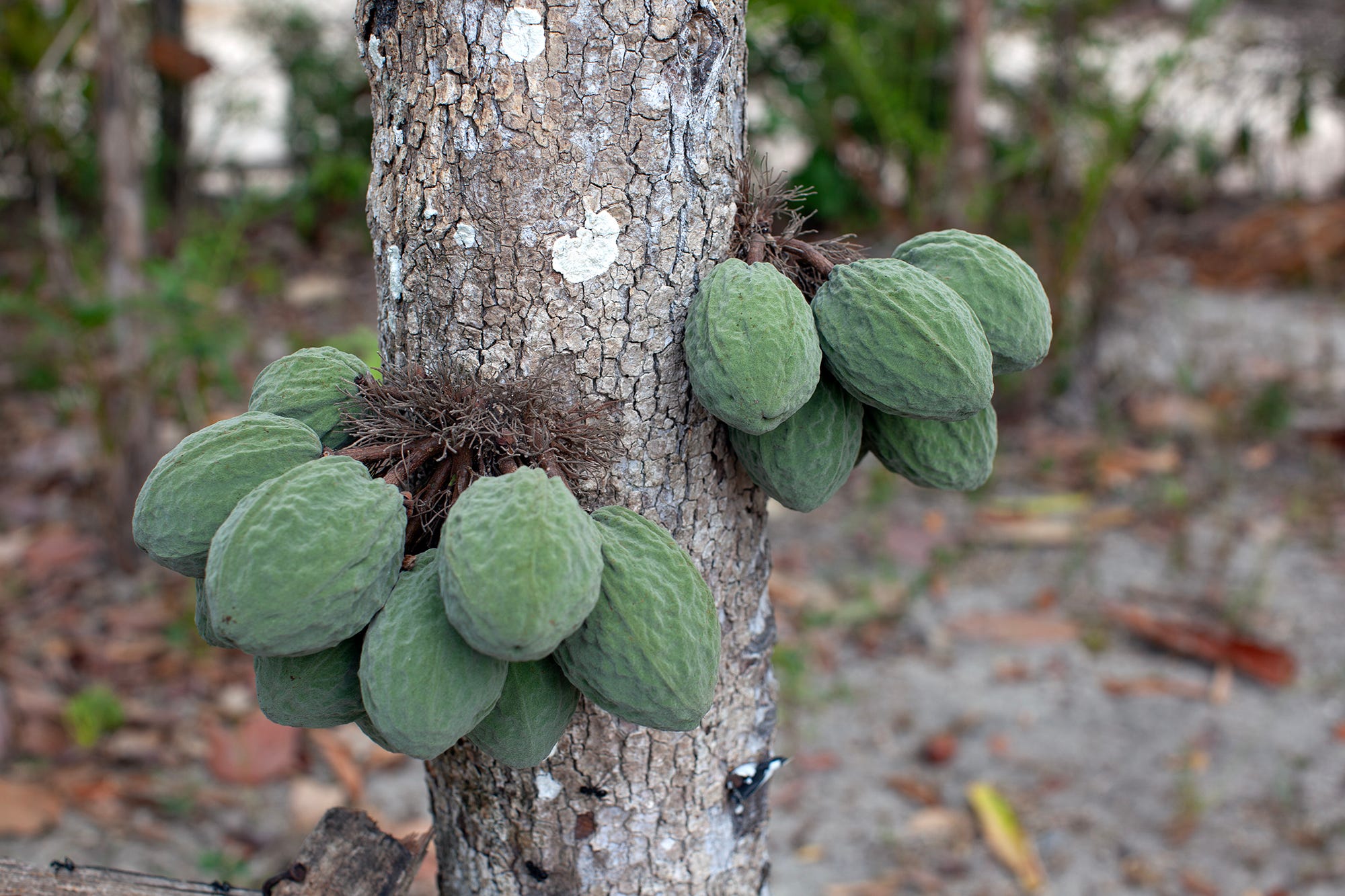
On the outskirts of Ourem in the Brazilian state of Pará, in a quilombo neighborhood, I was leaving someone’s home and walking to my car. Out of the corner of my eye something caught my attention. It was a roundish, green fruit, growing along the trunk and branches of a tall tree, along with some of the fruits rotting on the ground. It looked like cacao, which is not a particularly common looking fruit. No bigger than a grapefruit, it was considerably smaller than any cacao I had seen though. As I stared at it, it became clear that it wasn’t cacao.
It was certainly theobroma, a genus of flowering plants in the Malvaceae family. I had seen enough of the different species to recognize one. The genus encompasses a diverse range of species, including, yes, the widely known and planted theobroma cacao. Yet, there is a world of them each with their own unique characteristics and uses.
Most theobroma fruits are native to the Amazon and Central America, with species having been traded and cultivated back and forth. Domestication of some occurred in multiple over a time period that stretches back thousands of years, while other species remain purely wild.


Only the seeds of Theobroma cacao is used to make chocolate, at least commercially or at scale. Other species do produce seeds where a form of chocolate can be made, though it remains at an experimental level.
So what are these other theobroma fruits used for? For some, their nutrient dense seeds are a good source of protein. For others, their sweet pulp is ideal for juices and eating fresh. Others have medicinal uses.
The other members of this genus offer a wealth of diversity and promise for future exploration. As research continues to uncover the vastness of their properties, Theobroma species will play a greater role in agroforestry, gastronomy and medicine in the years to come.
The species I encountered in Ourem, the one in the photo above, was likely Theobroma speciosum. The fruit is widely planted across the northern half of South American tropics. The owner of the house told me he’ll sometimes make a kind of chocolate with the seeds, but for the most part they weren’t used anymore. When that tree dies it’s unlikely he’ll replant it.
There are many stories like this one. Of species with little commercial value fading away, yet the genetic material still remains. With greater interest in diverse agroforestry systems and flavors, these other theobromas, a wide variety of them listed below (though not all of them), may yet have a place.
Keep reading with a 7-day free trial
Subscribe to New Worlder to keep reading this post and get 7 days of free access to the full post archives.