

The Mapuche Hearth
A photo essay + vignette from Araucanía, Chile.
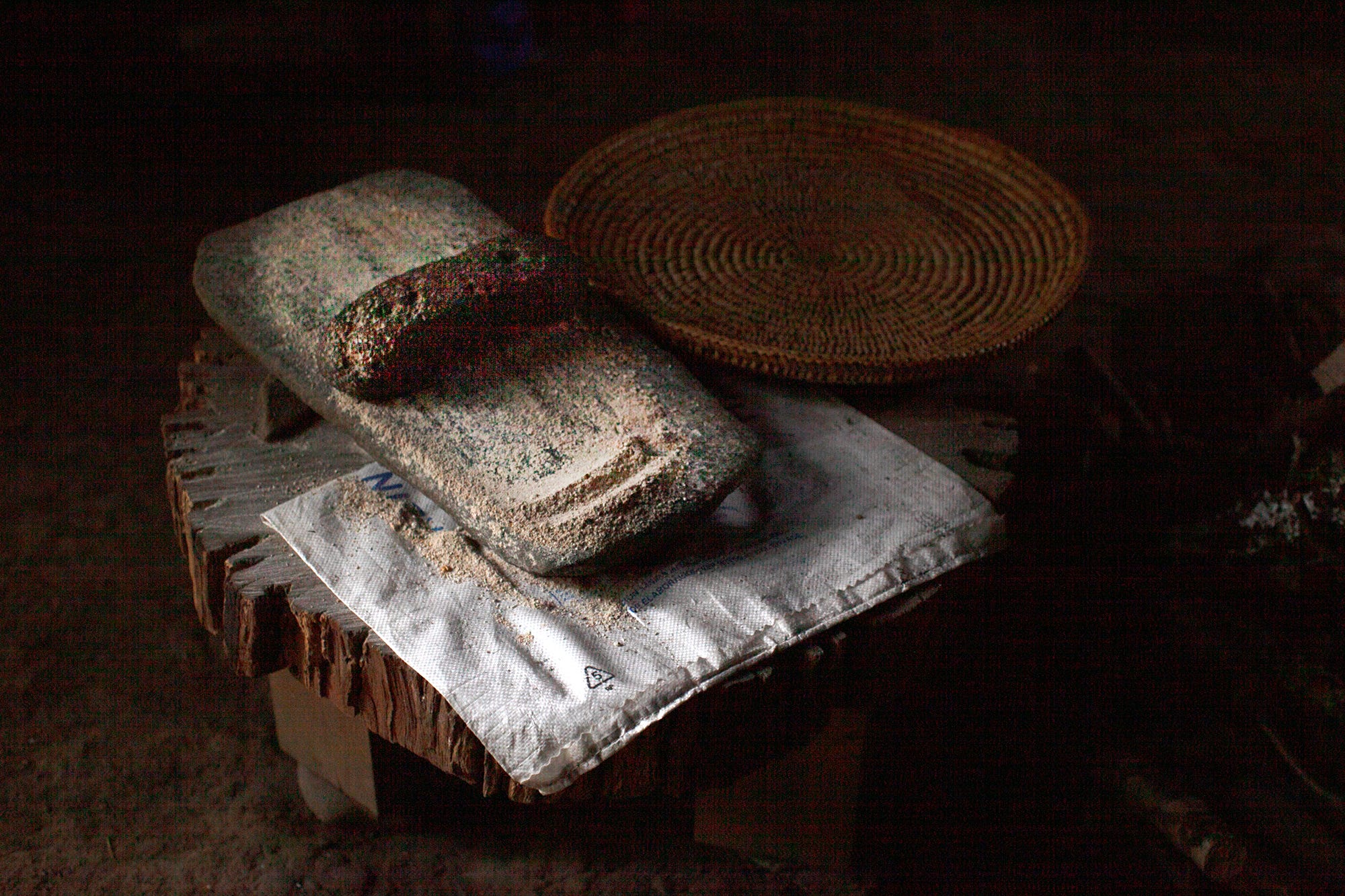
“The door has to face the direction where the morning rays of Antü come up and bring energy,” says Doña Rosario Colipi, using the Mapudungun word for the spirit of the sun.
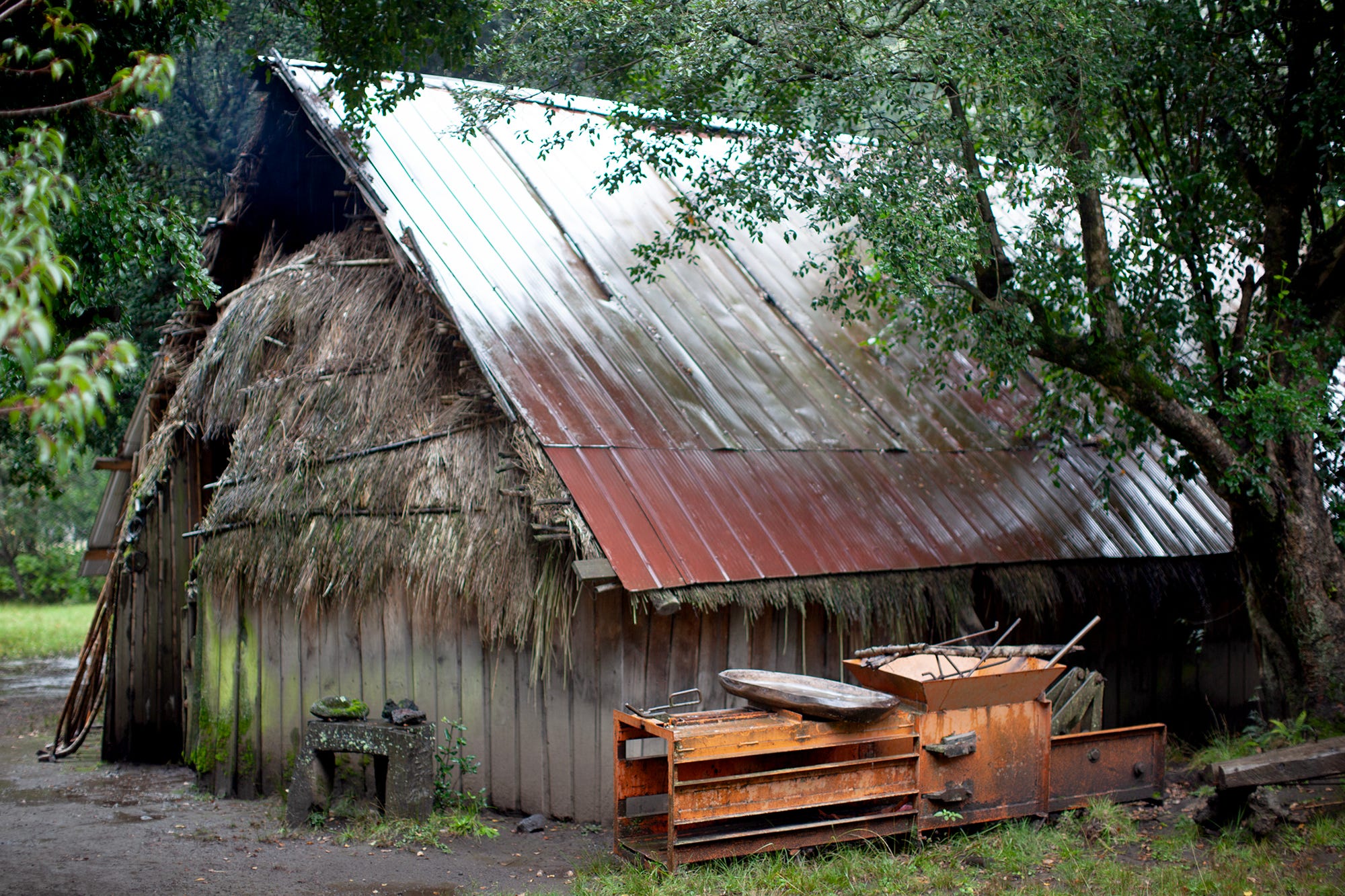
Her ruka, an elliptical-shaped structure where she spends a good part of her day, is an adapted one. While the roof is woven from overlapping layers of coligüe, a native bamboo, there are wood plank walls and a slanted metal roof sits on top to make it last a little longer in the constant wetness of the temperate rainforests of Araucanía in south central Chile.
The floor of the ruka is made of earth, for direct contact with Ñuke Mapu, or Mother Earth, she tells me. “Because Mother Earth gives us everything. That is why we love our Mother Earth so deeply. Because we live off the land. We raise all kinds of animals. We raise them on the pasture produced by Ñuke Mapu. If we plant a seed, it bears fruit, and we harvest it later to store for the winter. Our diet as Mapuche people always consists of grains.”
Doña Rosario, 74, calls everything that she grows and can be stored grains. Potatoes, wheat, beans, fava beans, peas, corn.
“These are all fruits produced by our Ñuke Mapu. It’s a lot of work, yes. We’ve been working the land since we were small children. We also plant fruit trees, and there are wild fruit trees that we harvest from as well.”
“What kind of fruits?” I ask.
“For example, the fruit of the Araucaria tree we have here. That fruit is the piñón.”
The tree is Araucaria araucana, Chile’s national tree, also called the monkey puzzle tree because of strange designs on its bark. It has rope like branches lined with rows of jagged, teeth like triangular leaves. The trees can grow for a thousand years and the piñónes are like a large pine nut, with a creamy, hazelnut like flavor. She roasts them to eat as a snack or grinds them into flour to make breads.
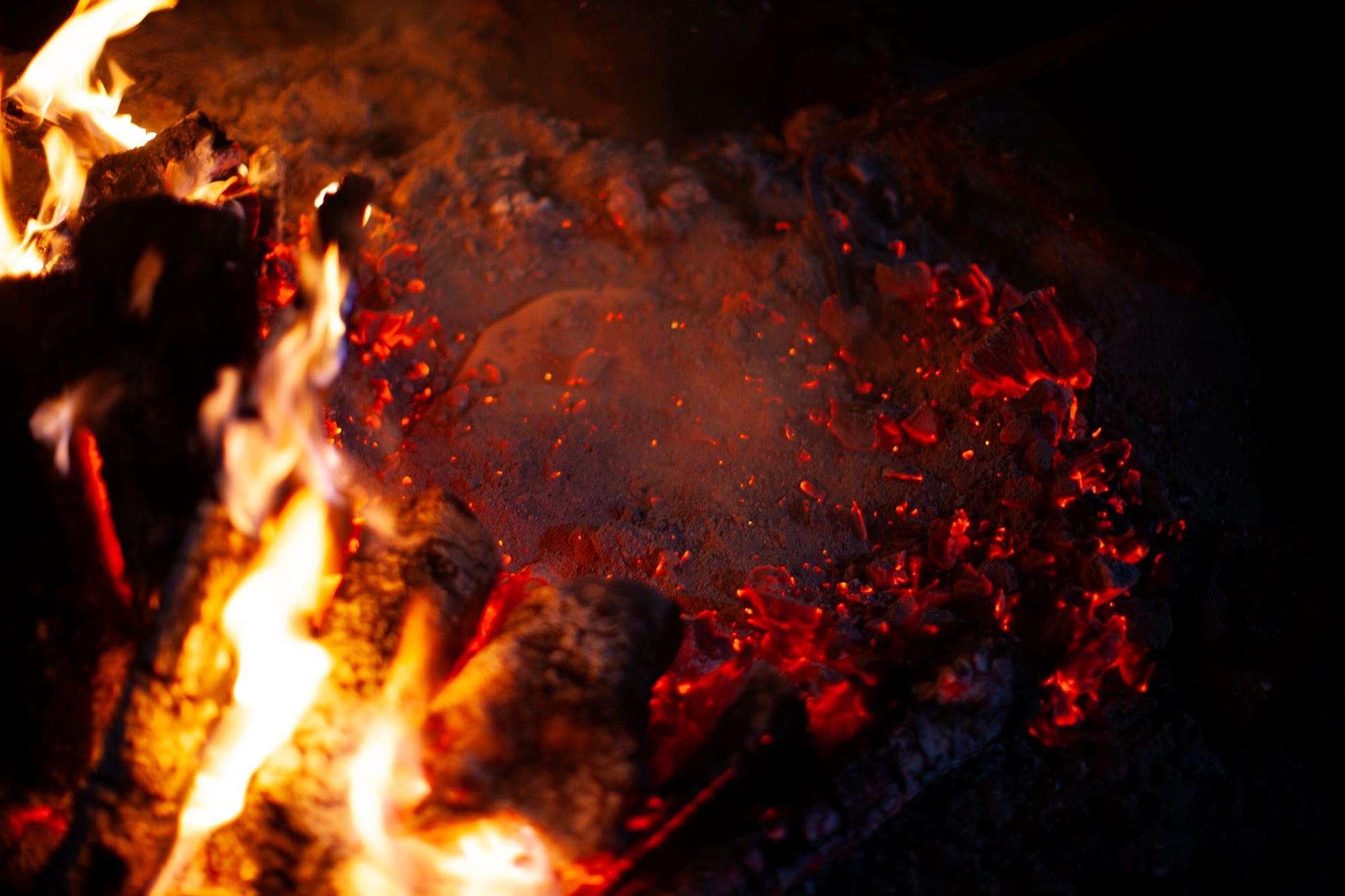
There’s a hole in the middle of the ceiling in the dark room for the smoke to escape. Beneath it, is the hearth. Filled with wood ash, it represents the enduring presence of fire and smoke. It carries both practical and cultural significance. It’s a cooking tool and way of living.
Mapuche cooking revolves around the hearth. Its smoke is a signature flavor of merkén, a seasoning blend made from aji cacho de cabra, Goat’s Horn Chile, which is mildly spicy. The long, pointed red peppers used to make the spice owe their name to the pepper’s slightly curved shape. After the February cacho de cabra harvest, Mapuche farmers dry the peppers in the sun until they become a rich purple. The chiles are then hung over a wood fire to be imbued with a deep smokiness. They’re sun-dried further before being finely ground.
Wheat is not native to Chile. It was introduced by the Spanish and the Mapuche quickly adopted it into their food system. This gave them a unique advantage because they had crops that matured at different times, making it more difficult for the Spanish to burn their food supplies. The Mapuche people were never conquered, they resisted and maintained their land for nearly three centuries after the initial Spanish invasion of 1590s. While disrupted by mass displacement and a lack of recognition of legal rights, their culture remains.
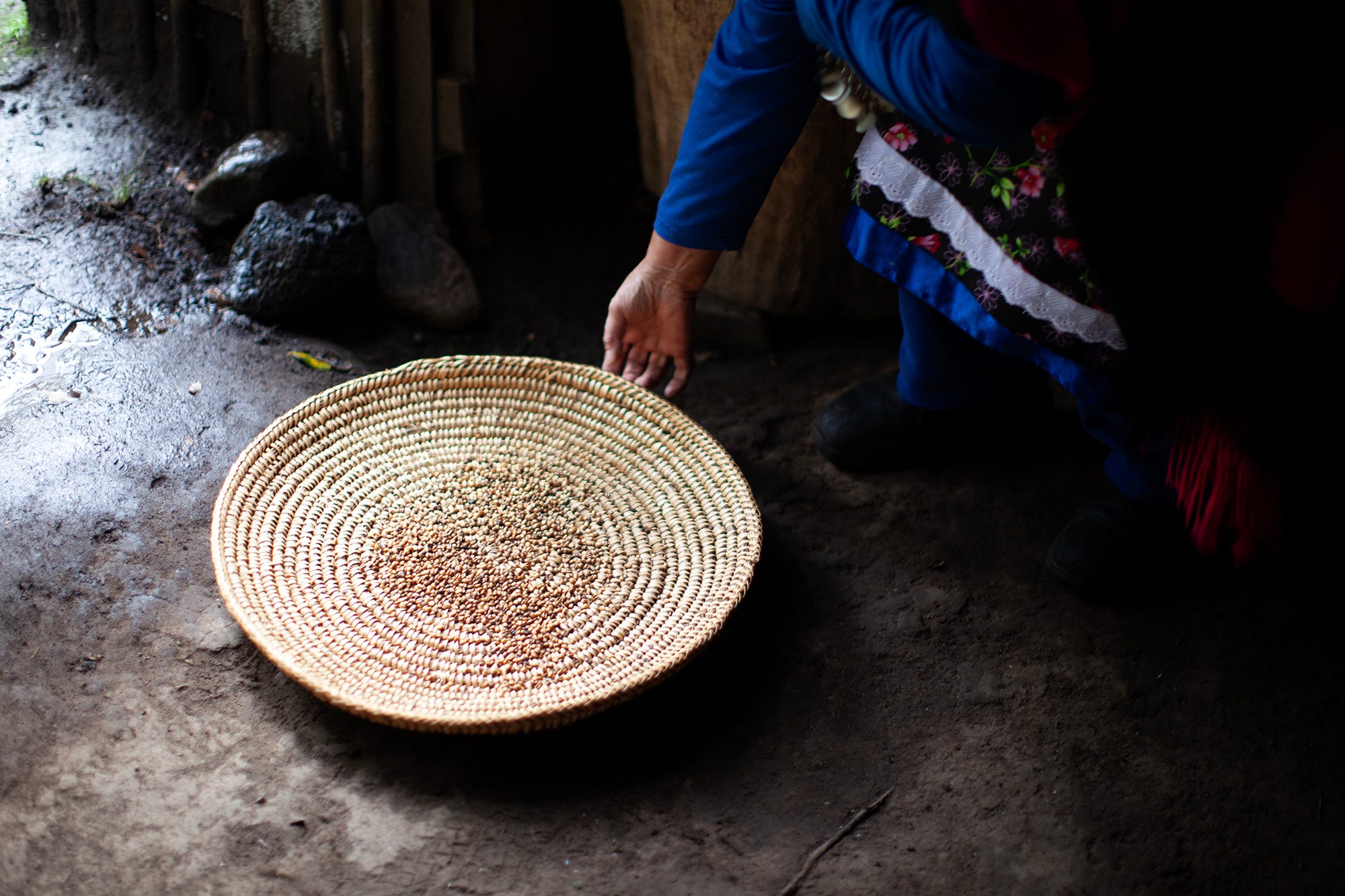
To separate the wheat from the chaff, it is winnowed, thrown into the air where the lighter chaff blows away and the wheat falls to the woven tray. Grains like wheat are harvested green to make stews, or can be fermented to make a drink called mudai. They are also formed into breads, such as the oblong catuto, or mültrün in Mapudungun.
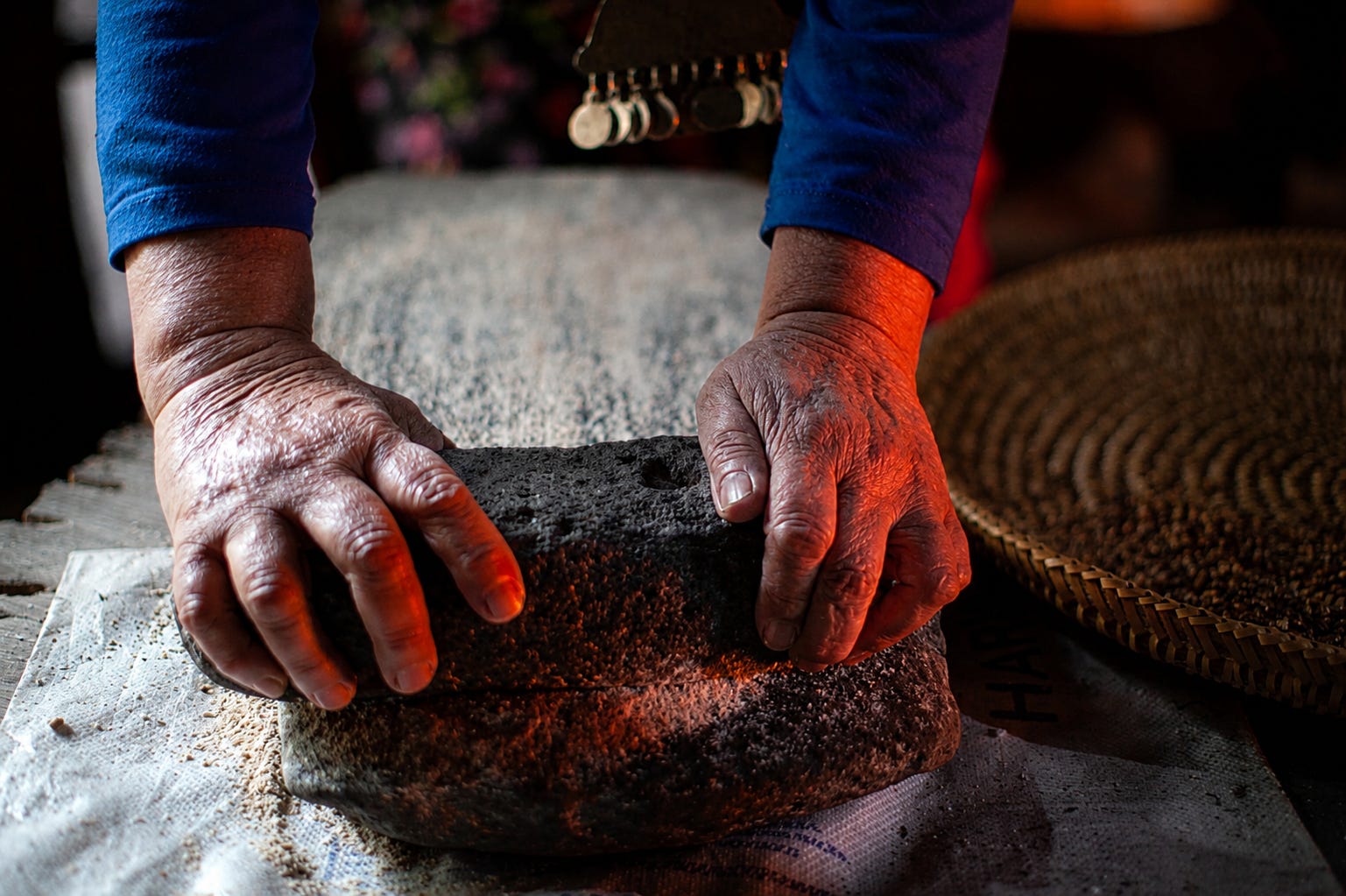
As we talk, she grinds trigo mote, or wheat berries, with a stone called kudi, to remove their husks in the same way they do with corn. It’s a process that the Chilean soldier Francisco Núñez de Pineda y Bascuñán witnessed when he was held prisoner by the Mapuche in the 1620s, as detailed in his 1673 memoir, Cautiverio Feliz, or The Happy Captive. Something of a gourmand, he ate well while living amongst the Mapuche for seven months, writing of empanadas, little cakes, plates of potatoes, packages of corn and beans and “spits of fat meat of the richest taste”.
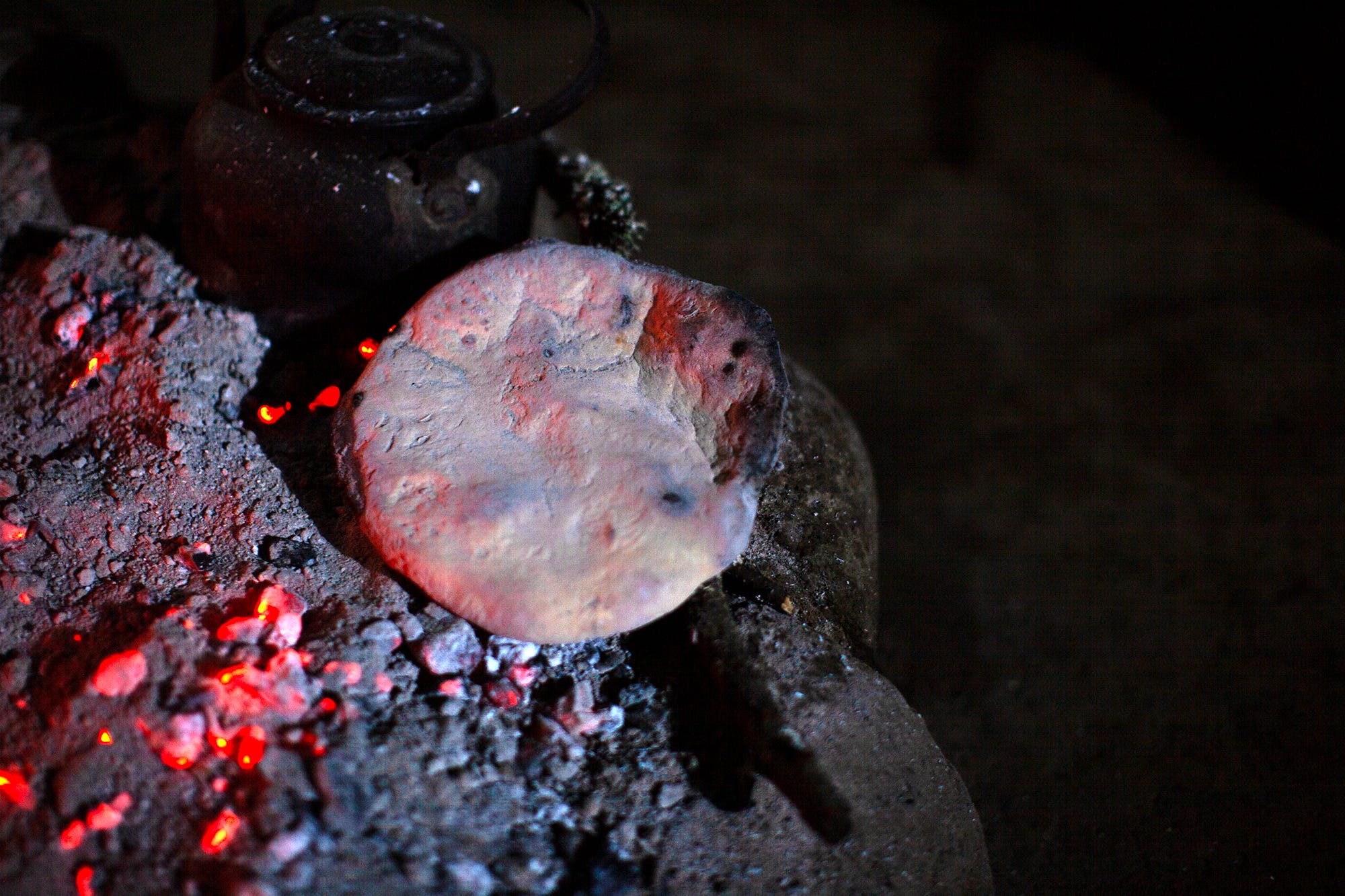
Her husband then mixes it with lard and forms it into a thick, frisbee sized loaf. He places it directly within the hot coals and buries it in ash, a process known as rescoldo. It bakes for a few minutes, and then he removes it. He wipes off the ash with a rag and the tortilla al rescoldo has charred spots on the outside. She tells me she wraps fish with nalca leaves, Gunnera tinctoria, or Chilean rhubarb, and buries the green packages in ash in the same way.
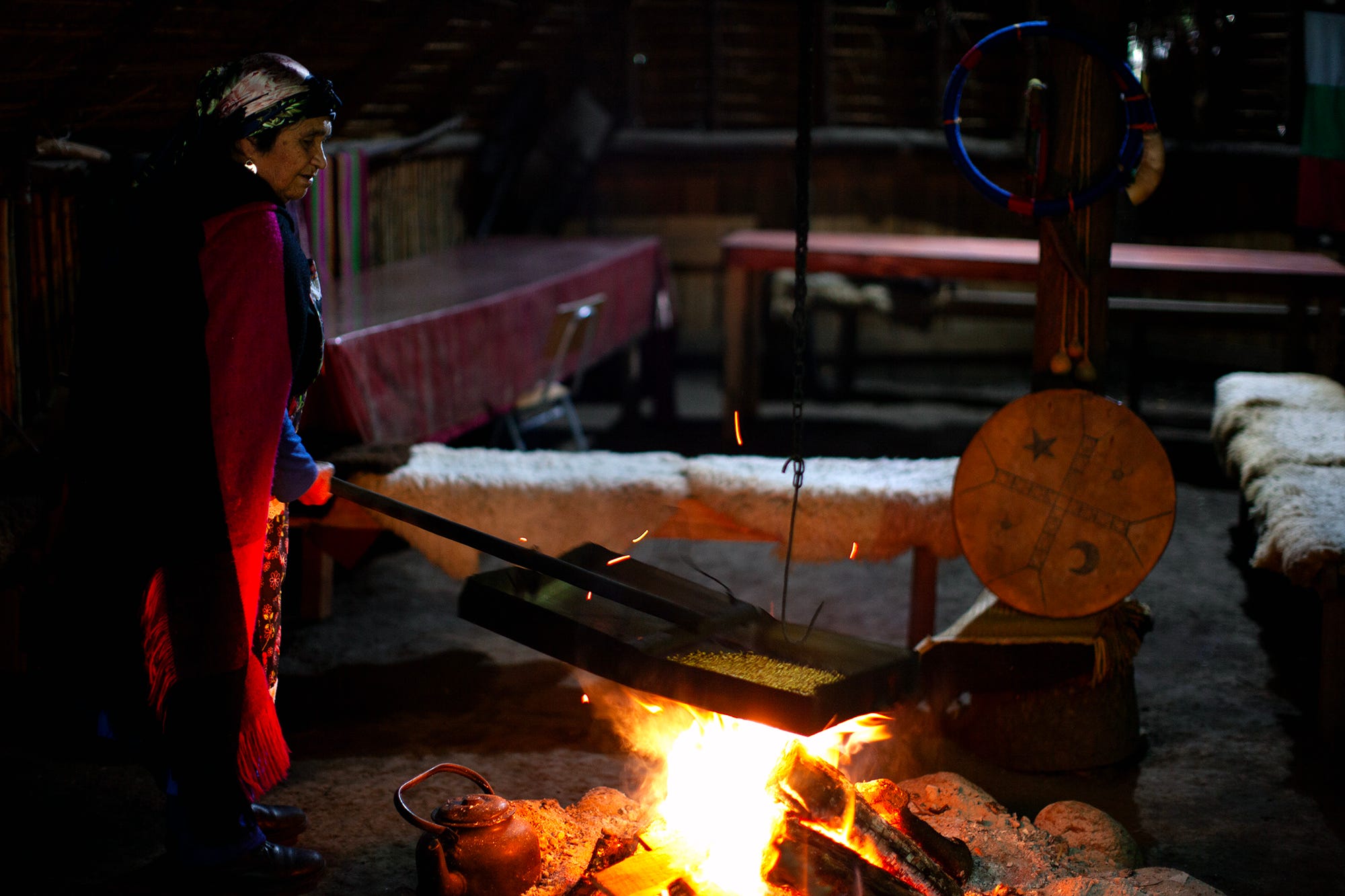
She also toasts the wheat berries whole in a metal tray over the fire, then grinds them to make a toasted flour called mürke. The dark powder looks like coffee, and she places it in a filter and pours hot water over it in much the same way. It’s black in color and has a smoky flavor.
It’s called café de espino and can be made from more than just wheat. Other seeds, grains, and fruits can be used like figs or the seeds and berries of the churqui tree, Vachellia caven.
We sip on the coffee and eat the tortilla al rescoldo with ulmo flower honey that she collects in her garden and she tells me of Wiñoy Tripantu, a three day event that marks the winter solstice in the southern hemisphere. It signifies the return of the sun, the rebirth of nature, and the start of a new agricultural cycle.
“It’s celebrated in every Mapuche home; there’s a lot of cooking—an abundance of food. You can make mote (boiled wheat). You can make mote with beans, or mote with peas. Or you might cook a couple of chickens in a large stew pot. You might roast a whole lamb. I don’t know. However someone chooses to celebrate it. That’s what’s done.”
“On the first day, we stay at home and offer a prayer before dawn breaks. We hold a ceremony with the whole family. We play music and all that. It takes place right in the home. On the second day, we visit people who are alone. The ones whose children have grown up or have married and moved away, leaving the couple alone in the house. Or, the husband has passed away, leaving the woman on her own, or the woman has died, leaving the man alone. So, we visit them to bring a bit of joy, to share mate with them. It’s for everyone—for the trees, the animals, humans, for the whole world. We celebrate and renew ourselves spiritually, together with Mother Nature.”
As we finish the bread and coffee, the last light fades from the mist and the trees and the sun falls behind the mountains, the room darkens. Only the glow of the hearth remains.
Note
Doña Rosario Colipi lives in the Mapuche community of Qhelue, which is home to around 300 others and 10 rucas. She occasionally opens her ruka, Ruka Antu Rayen, for guests. There is no direct method for contacting her, however, various travel agencies and hotels in Pucón can make arrangements.
Planting crops that mature at different times so the Spanish couldn't burn the whole supply at once is food as resistance in its purest form.
Beautiful.